
18 Technology Features That Improve Employee Feedback and Engagement
Employee feedback and engagement rely on technology that streamlines communication and recognizes contributions in real time. This article explores 18 practical features—from pulse checks and automated error flags to peer kudos and trend snapshots—that help organizations build stronger connections with their teams. Industry experts share how these tools transform routine interactions into meaningful opportunities for growth and recognition.
- Provide Contextual Cues After Tasks
- Create Dedicated Channels For Workstreams
- Enable Time-Stamped Peer Kudos
- Align Live Metrics With Timely Prompts
- Run Pulse Checks For Rapid Insight
- Log Short Check-Ins On The Job
- Tag Teammates Directly Inside Notes
- Embed Task Comments Inside Work
- Introduce Error Flag Automation
- Deliver Immediate Genuine Recognition
- Display Dynamic Dashboards And Celebrations
- Adopt Photo Proof For Quick Praise
- Send Automated Nudges To Mentors
- Sync Field Data For Real Rewards
- Leverage Skill Gap Analysis For Growth
- Trigger Two-Question Post-Deal Surveys
- Show Week-Over-Week Trend Snapshots
- Apply Version History With Attribution
Provide Contextual Cues After Tasks
Through tech, our approach to feedback has evolved from being a quarterly thing to being a living dialogue. The major change in how we view feedback was shifting from seeing it as only a “manager’s job” to now seeing it as sharing signals in almost real time.
We created lightweight internal tools to identify micro-feedback that occurs during the daily flow of work. Examples of these tools would include short reflections that occur immediately after live classes, asynchronous notes written immediately after having completed cross-team projects and AI-generated summaries that identify patterns in the data but do not judge the employee. The most value derived from the tools we built came from the context-aware feedback prompts. Instead of generic prompts, such as “how was this for you?” or “how did this experience go?” the feedback prompt provided managers with something to work off that related specifically to the person receiving feedback based upon the things that were actually done, including a lesson delivered, a parent interaction that occurred, and/or a sprint that had occurred and/or was being completed.
Upon creating and utilising our tools to deliver contextualised feedback, the amount of time that managers take to deliver feedback has decreased because of the ease of using the tool; likewise, employees feel that the feedback provided has far more accuracy, timeliness, and quality due to the contextual nature of how the tools function. We are seeing dramatic increases of over 40% of people participating in our feedback loops, in addition to the fact that people are no longer surprised when it comes to their performance reviews. Technology is very much the opposite of taking the human aspect out of providing feedback. Rather, technology has allowed for more frequent, timely, relevant, and humanised forms of the sharing of performance feedback.

Create Dedicated Channels For Workstreams
I run a national dental supply company, and we learned this the hard way during the 2020-2021 supply chain chaos. Our warehouse team was making split-second decisions about inventory allocation while tariffs were spiking 300%, but I was getting updates through end-of-week emails. By the time I could respond to issues, we’d already lost customers.
We switched to a shared Slack workspace integrated with our Shopify Plus backend. Now when our fulfillment lead sees a stockout forming on EZDoff gloves or gets a bulk order question, I can approve pricing exceptions or redirect inventory in under 5 minutes—even from my phone. Last month alone, that instant communication loop saved us three major accounts who would’ve walked if they’d heard “let me check with management and get back to you tomorrow.”
The killer feature wasn’t the chat itself—it was creating dedicated channels for specific product lines. Our sterilization team gets real-time feedback when FDA compliance docs need updating, and I can immediately praise our customer service rep when I see them solve a complex order issue in the thread. One of our reps told me she used to wait weeks wondering if she handled a complaint properly; now she knows within the hour.
Performance reviews became almost redundant because we’re constantly coaching in the moment. When your team can see you’re actually watching their work and responding fast, they stop second-guessing themselves and just execute.
Enable Time-Stamped Peer Kudos
If I had to choose one lever that moves the needle, it would be time-stamped peer validation. Any time an employee reaches a decision or overcomes something challenging, peers have 30 seconds to evaluate or comment with a one-click tag. You can cap it at five words or make it emoji only…but make sure it’s quick, from peers and attached to timestamped behavior. This builds an ongoing reputation currency that’s visible over time. Best of all, it forces accountability to happen when the work is actually happening instead of during watered down quarterly goals.
Engagement happens when receiving recognition doesn’t feel like a transaction. If an employee makes a call on Thursday at 4:45 that eliminates five hours of work for the rest of the team and three of his coworkers can immediately tag that decision, trust is built. No manager approval. No HR bottleneck. Just organic, public documentation of signal vs noise. Employees will start competing against each other on being valuable, not busy. That’s feedback that is fast, RETENTIVE and spreads like wildfire.

Align Live Metrics With Timely Prompts
We built our performance management process at Level 6 Incentives around two core ideas: feedback needs to show up soon after the work happens, and rewards should reflect achievements in ways employees genuinely value. A few years back, performance conversations often lived inside quarterly reviews. By the time those discussions happened, momentum had already passed. Today, our system delivers daily performance visibility, which keeps engagement high because employees can clearly connect effort with outcomes in real time.
Employee rewards are embedded directly into that system. When milestones are reached, progress is visible and recognition follows without delay. That clarity removes uncertainty and helps teams stay focused on what matters most. We also integrate customer rebate data into performance dashboards, giving employees a clear view of how their work supports customer success and long-term growth. Seeing that connection reinforces purpose and accountability across roles.
The single feature that proved most valuable has been real-time performance indicators paired with immediate feedback prompts. Managers and employees can have meaningful conversations grounded in current data rather than looking backward. When those indicators are aligned with employee rewards and customer rebate outcomes, engagement strengthens naturally. People understand how daily actions translate into recognition, stronger customer relationships, and measurable business results.

Run Pulse Checks For Rapid Insight
Technology has greatly enhanced my ability to provide employees with timely feedback through our performance management system, integrating real-time performance measurement and communication. Platforms such as 15Five enable us to set clear goals and Key Performance Indicators (KPIs) and to have continuous touchpoints with employees, rather than an annual review. This approach allows me to quickly assess any challenges that may arise, provide guidance, and make necessary adjustments to promote employee development on an ongoing basis.
One of the best aspects of our system is the pulse check surveys. They enable us to gather instant feedback from employees on their level of engagement and overall perception of the company. The pulse checks are a quick way to gauge employee satisfaction and identify potential problem areas. If I receive several negative responses from employees regarding workload, I can immediately begin a conversation with employees about how to allocate resources and/or support them to prevent the situation from escalating. Not only do these pulse checks enhance employee engagement by making employees feel heard and valued, but they also create a more responsive and flexible work environment.

Log Short Check-Ins On The Job
The biggest shift was managers and employees having short, structured check-ins in the flow of work, not just twice a year.
Technology helped us move from twice yearly, heavy performance reviews to regular, lighter conversations. The single most valuable feature was the ability to log short, structured check-ins in real time. Rather than waiting for a formal review cycle, managers quickly recorded feedback after a project, a customer escalation, or a key decision. Employees can ask for feedback directly in the tool, eliminating the wait for potentially awkward conversations.
What improved engagement was the feeling that people were being seen and supported rather than judged months later. Because these check-ins are easy, managers lean into them. Over time, they more accurately show progress, challenges, and support visible to both sides. That makes the formal review a summary of an ongoing conversation, rather than an event that everyone dreads.

Tag Teammates Directly Inside Notes
Putting feedback tools into our NetSuite stopped all the back-and-forth emails about performance. We finally stopped chasing people down. The best part was tagging someone directly in the notes. They’d see it right away and respond on the spot. It just made things simple. If you manage remote teams, this feature is worth trying.

Embed Task Comments Inside Work
At my company, Truly Tough Contractors, we switched to in-app task comments and it changed everything. Supervisors now give feedback in hours, not weeks. Our crews working on their own feel more connected and morale is way up. If you want to boost engagement, build feedback right into the daily work and skip the formal reviews.

Introduce Error Flag Automation
Timeliness in healthcare administration is critical; thus, technology has eliminated the time between taking an action and obtaining a response. By implementing an automated error-flagging system in our compliance software, immediate objective feedback can be provided regarding data entry and reporting errors. This capability enables users to turn all mistakes into teaching opportunities almost instantaneously. The automated error-flagging capability provides continual oversight and ensures public health programs remain on course while providing staff with a sense of accomplishment and reliability in their work accuracy. Efficiency builds upon this rapid and electronic feedback loop.

Deliver Immediate Genuine Recognition
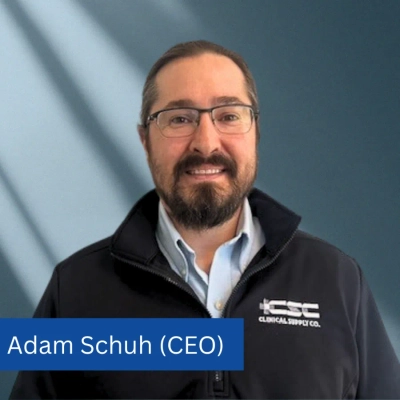
Being the CEO of Dewitt Pharma, I think one of the most important methods to assist employees is to provide feedback to them as soon as possible. Minor problems cannot be left to continue their ways unnoticed merely because one waits for the end of quarterly or annual reviews. I also give feedback immediately after the discussion using a digital performance management system. All are harmonized and geared towards perpetual growth as the employees know what is performing and what they need to change.
The most changed aspect that has altered the degree of engagement is the ability to provide immediate and definite recognition. This recognition, when an individual is recognized instantly, will be genuine and not habitual. The approach not only motivates the workers but also encourages the rapid delivery of feedback to make performance management a two-way conversation rather than an annual drama. Progressively, it will create more trust, improve the professional level of workers, and make the workplace more engaged and productive.

Display Dynamic Dashboards And Celebrations
I’ve been running our family dealership for years and chairing the Mercedes-Benz Dealer Board, so I’ve learned performance management needs to be as personal as selling a $150,000 vehicle—you can’t automate trust.
The game-changer for us wasn’t a fancy platform. We implemented visual performance dashboards mounted in our service bays and sales floors that update live throughout the day. Every technician and sales advisor can see their metrics in real-time compared to yesterday, last week, and their personal goals—no waiting for their manager to schedule a sit-down.
What surprised me most was how competitive transparency became motivating rather than stressful. Our top service advisor told me he checks his dashboard between every appointment now, adjusting his approach immediately if his customer satisfaction scores dip. We saw our Mercedes service retention climb 19% in six months because techs could course-correct before a customer left unhappy.
The feature that actually moved the needle? Public milestone celebrations displayed on those same screens. When someone hits a goal, the whole floor sees it instantly with their photo and achievement. My grandfather built this business on dignity and recognition—technology just lets us do it in the moment instead of at an annual dinner.

Adopt Photo Proof For Quick Praise
Getting our cleaning crew on a mobile app has been a huge help. I can shoot them a quick tip or a “nice job” right after they finish a space. The photo sharing feature is what really matters. They upload a picture of their work and get feedback instantly, instead of waiting for a formal review. When you’re managing part-timers across different sites, that immediate response really helps everyone stay on track.

Send Automated Nudges To Mentors
Running our mentoring platform, I found that automated tracking made the biggest difference. When the data showed a mentee had been quiet for a few days, I’d nudge their mentor to check in. That was it. Participation would jump right back up. Those automated reminders were what actually kept everyone connected and talking.

Sync Field Data For Real Rewards
We moved to a system where performance data syncs automatically after every job closes out. This eliminated the whole problem of waiting until review season to tell someone how they’re doing. Our installers and project managers now get updates within hours of finishing their work.
GPS tracking combined with completion reports gave us the feature that really boosted engagement. I can see exactly how long each phase took and compare it to our standards. When someone finishes ahead of schedule with good quality work, I recognize them immediately. When timelines slip, we can talk about it while the details are still fresh instead of trying to reconstruct what happened three months later during an annual review.
The team started competing in a healthy way once they realized their performance was visible right away. They’ll text each other about finishing jobs efficiently, and I’ve noticed guys helping slower team members improve instead of just letting them struggle. Roof Republic runs on trust and accountability, and this system reinforced both of those values. Immediate feedback keeps everyone engaged because they’re not working in the dark anymore wondering if anyone notices their effort. They know within hours if they hit the mark or if we need to adjust something for the next project.

Leverage Skill Gap Analysis For Growth
We’ve leveraged digital platforms to make professional development an ongoing, data-driven experience for all our team members. The ability to conduct automated skill gap analysis has provided tremendous value by providing suggested training modules for individuals based upon their most recent job performance. This allows me to provide feedback to my employees while also providing them with a clear and actionable solution for their future development. This is effective, as it takes an employee’s performance from being labeled as “what you did wrong” to “how you can improve in this area.” Employee engagement has increased because they feel that the organization is actively invested in their long-term education and development.

Trigger Two-Question Post-Deal Surveys
Getting our team to actually use feedback was tough. We started using our CRM to send a two-question survey after each deal closes. I see the answers instantly and can follow up with a call or a quick coffee chat. The response has been great because people aren’t waiting weeks for a review. They get help right when they need it.

Show Week-Over-Week Trend Snapshots
Technology helped me give feedback closer to the moment work actually happened. At Advanced Professional Accounting Services, we used short pulse notes tied to task completion. Managers left comments within hours, not at review time. The most valuable feature was trend snapshots that showed progress week to week. Employees could see growth forming. Engagement improved because feedback felt supportive, timely, and tied to real effort instead of memory.

Apply Version History With Attribution
Managing remote talent taught me that feedback loses impact when it’s reactive rather than continuous. In traditional office settings, casual hallway conversations serve as micro-feedback moments. Working remotely, you need to intentionally recreate those touchpoints through technology, or performance management becomes a once-a-quarter afterthought.
What proved transformative was centralized documentation where contributions are visible and commentable in shared spaces. Whether it’s refining interview processes or improving candidate experience, having a written record of decisions and implementations creates natural feedback opportunities. You’re not manufacturing performance conversations; they emerge organically from the work itself.
The most valuable feature? Version history with contributor attribution. Seeing who shaped what, when, and how creates an objective foundation for performance discussions. There’s no ambiguity about impact. When you’re pre-screening candidates or building shortlists, every improvement to the process is documented and attributable. This transparency eliminates the guesswork from performance evaluation.
This approach dramatically improved engagement because people could see their influence persisting beyond individual tasks. A refinement someone made to screening criteria three months ago continues benefiting every placement. That visible, lasting impact creates ownership and pride that generic praise never achieves. Remote workers stop feeling like they’re completing isolated tasks and start seeing themselves as builders of something meaningful that evolves with their contributions.